I N - D E P T H F I L M & T V C O V E R A G E
|
Congress' Tax Plan Inspiring Anxiety in Hollywood's Rank & File

As a professional juggler, Michael Rayner has a lot of work-related tax deductions each year, including $700 for the cheeseburgers he spins atop parasols, 30,000 travel miles and $220 for liability insurance, just in case one of the pins or flaming torches he flips into the air should somehow stray into the audience.
His wife, actress and voiceover artist Moira Quirk, also has a wealth of business-related deductions, the most significant of which is the 10% commission she pays her agent. And they write off 25% of the mortgage and expenses for their North Hollywood house for their respective home offices, which include a recording booth for her and rehearsal and juggling supply storage areas for him. Now, the massive tax bills passed by the House and the Senate (429 and 479 pages, respectively) earlier this month have thrown the future of these write-offs into question, casting a cloud of fear and uncertainty over the financial fates of Rayner and other workaday entertainment pros. The panic has been amplified by a widely shared Facebook posting erroneously asserting that deductions for unreimbursed business expenses were being eliminated for small businesses and the self-employed. 
On the 30th anniversary of the tragic accident on the set of "Twilight Zone: The Movie" that took the lives of actor Vic Morrow, Myca Dinh Le (age 7) and Renee Chen (age 6), I take a look back at the incident and examine
the current state of movie set safety in this cover story in Weekly Variety. On the Set of CBS' 'Code Black'
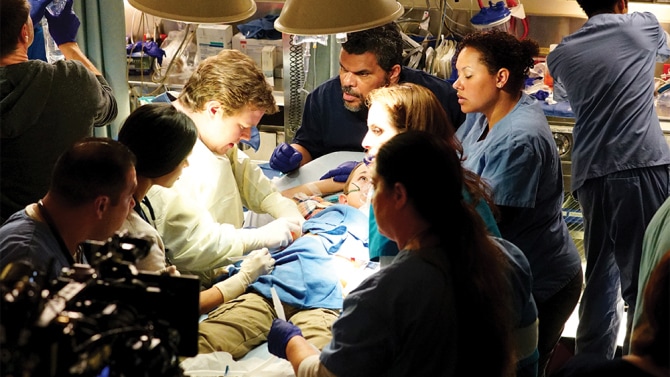
On CBS’ “Code Black,” the hallways and operating rooms of Angels Memorial Hospital don’t have the gleaming white surfaces seen on the typical medical show. The space is gritty and lived-in, with layers of wear reflecting the building’s 80-plus-year history, as well as its status as a chaotic, overtaxed trauma center.
Click here to read my entire article in Variety taking a behind the scenes look at the "Code Black" set. Bringing Louisiana Up to Hollywood Standards
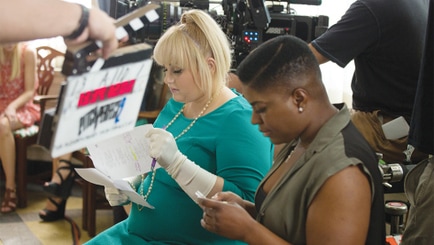
When producer Scott Niemeyer came to New Orleans to shoot his 2012 film “Pitch Perfect,” he found a lot of cheap production space: empty warehouses and abandoned stores standing in for soundstages and decommissioned state buildings. But he discovered that, in most cases, you get what you pay for. He had to bring in diesel generators for power, supplemental HVAC systems for air conditioning and erect lighting grids.
And don’t even talk about the soundproofing. “Anything goes there,” Niemeyer says. “The sound guys pull their hair out, and we spend time in ADR trying to fix it.” Click here to read the rest of my article in the Oct. 13, 2015, issue of Variety. 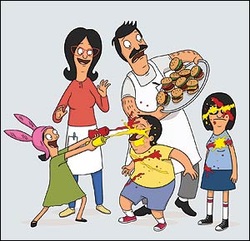
I go behind the scenes
at the offices of Bento Box Entertainment, the rising animation house behind such shows as "Bob's Burgers," "Brickleberry" and "Allen Gregory" (co-created by Jonah Hill). 
Find out how the Arab Spring uprisings threw a wrench into the shooting of "Prometheus" in my Variety profile of director Ridley Scott's "billion-dollar production team."
Also check out my individual profiles of the film's production designer Arthur Max and editor Pietro Scalia. 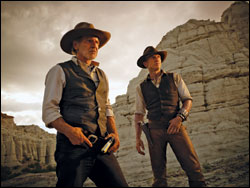
The Feb. 11 headline in the Hawaii Reporter called it "Shock and Awe." The day before, former President Clinton had submitted a letter endorsing a plan by Relativity Media and partner Shangri-La Industries (founded by Steve Bing) to build what he called "the most environmentally friendly stages in existence" on Maui and Oahu, if the Hawaii Legislature would support a pair of bills boosting the state's film and TV production tax credits to 35% (from 15%) on Oahu and 40% (from 20%) on the neighboring islands.
Three days later, following hours of testimony before a state Senate committee debating the issue, Relativity chief Ryan Kavanaugh poured on the glitter with a star-studded, invitation-only reception at Mandalay Restaurant in downtown Honolulu reportedly attended by more than 100 state legislators and such celebs as Bradley Cooper, Adrien Brody, Zach Braff and Roseanne Barr. Click here to read the entire article from Variety. 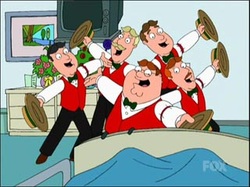
Outside of talent competitions like Fox's "American Idol" and ABC's "Dancing With the Stars," it's hard to find much music on network television these days. Fox's "Family Guy" is the rare exception. Its anarchic story lines send it veering wildly from Broadway-style production numbers to movie and TV parodies scored in the style of their original composers. The men behind the musical mayhem are Walter Murphy and Ron Jones, who not only compose and conduct the eclectic underscore, but also the musical backing for politically incorrect ditties such as "Prom Night Dumpster Baby" and "You've Got AIDS."
Click here to read the entire article in The Hollywood Reporter. 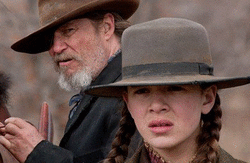
Can The Dude outdo The Duke? In this "Anatomy of a Contender" feature from The
Hollywood Reporter, filmmakers Joel & Ethan Coen and stars Hailee Steinfeld, Matt
Damon and a very Lebowski-esque Jeff
Bridges talk about the challenge of bringing Charles Portis' True Grit to the big screen, while
working in the shadow of John Wayne, who won an Oscar for his
performance in the 1969 adaptation of the novel. Click here
to read the article.
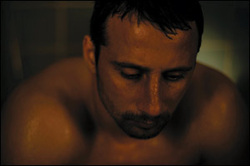 Matthias Schoenaerts in the Belgian film "Bullhead"
What happens when foreign language filmmakers try to go Hollywood? Find out in my article in Variety.
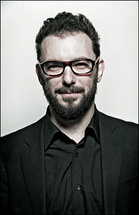
Always wanted to see a film about an emasculated Limburg cattle farmer mixed up with with West Flemish beef traders in the Belgian growth hormone underground? Then you'll be eager to read my profile of Michael R. Roskam, writer/director of the Oscar-nominated film "Bullhead," in Variety's "10 Directors to Watch" issue.
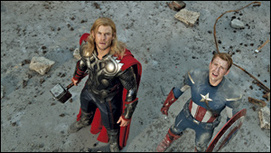 "The Avengers" on location in Ohio.
When Jay Villwock got laid off from his job as a TV news reporter in Des Moines, Iowa, in early 2009, the state had recently enacted one of the most generous film and TV production incentives in the country.Its 25% tax credit for in-state expenditures and a 25% tax credit for investors attracted an influx of projects into Iowa, which had only hosted a handful of movies during the previous few decades, most notably 1989's "Field of Dreams."
Villwock had studied theater in college and done some summer stock. Why not give acting another shot? In short order, he found himself in a scene with Adrien Brody and Forest Whitaker in "The Experiment" and playing a zombie in "Collapse." "I could hardly believe it," gushes Villwock, who today is president of the Iowa Motion Picture Assn. "It was this golden opportunity; a once in a lifetime thing." Then, in September 2009, an audit revealed improprieties in Iowa's incentive program. The governor suspended the tax credit, and the flood of productions pouring into the state dried up. Read my entire story in Variety's "Global Locations Update" and find out more ways the film and TV production incentive programs sweeping the nation can both giveth and taketh away, whether the party in question is a multi-national corporation or a struggling actor. In this article for Variety, I call on a group of industry leaders (Weinstein Company COO David Glasser, Morgan Creek co-chairman and COO Rick Nicita and Endgame Entertainment CEO Jim Stern) to give their views on the state of the film business.
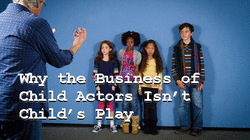
Child actors dream of being the next Miley Cyrus or Miranda Cosgrove (iCarly), with millions of fans, a fat TV
contract, record deals and studios clamoring to create big-screen roles
them. But is it really worth all the time and money invested by young thesps and their parents, even if they do score that coveted role on a Disney Channel or Nickelodeon show?
Click here to read the article in The Hollywood Reporter. Also check out the sidebar Is Teaching Kids to Perform Worth the Money? 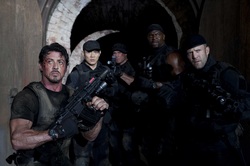
Will the blockbuster success of The
Expendables lift its prolific producer, Nu Image/Millennium Films
co-chairman Avi Lerner, out of
B-movie purgatory? Does the alternately combative and cool Israeli
native give a damn? I get the lowdown from the film's
writer/director/star Sylvester Stallone,
director Richard Donner (Lethal Weapon, Superman) and Lerner
himself. Click here to read the article in The Hollywood
Reporter.

What awards show has honored Sarah Silverman for her song "I'm F***ing
Matt Damon" (from ABC's Jimmy Kimmel Live), blasphemed Jesus and
featured a nonagenarian fitness guru leading its audience in
calisthenics? It's the Creative Arts Emmys -- or, as Kathy Griffin likes to call them, the Schmemmys -- the most unpredictable show biz kudofest this side of the Golden Globes.
Click here for the article in The Hollywood Reporter. 
"Unless people worked here or they were attending a performance at the Music Center, they just never bothered to come downtown," says Carol E. Schatz, president and CEO of the Central City Association of Los Angeles, an advocacy group for local businesses.
But Lee Zeidman remembers the pre-Staples landscape vividly. "We used to look down on the site from the 27th floor of the TCW building, just as we were starting to dig the hole and condemn some of the buildings," recalls Zeidman, who serves as senior vp and GM of Staples Center and the adjacent Nokia Theatre and L.A. Live for co-owner and operator AEG. "There were dilapidated buildings in various states of decay, different types of liquor stores on the corners. They were basically drug and prostitute hangouts." A mere decade later, Staples has already built a storied history... Click here to read the entire special report from The Hollywood Reporter, which includes an Q&A with AEG president & CEO Tim Leiweke. You can also jump to my pieces on the Staples Center's face-lift and its charitable foundation. 
Read my interviews with four Oscar-nominated actors -- John Hawkes (Winter's Bone), Lesley Manville (Another Year), Hailee Steinfeld (True Grit) and Jacki Weaver (Animal Kingdom) -- and one that should've been, Andrew Garfield (The Social Network), here in The Hollywood Reporter's special report on the 2011 Santa Barbara International Film Festival.

The life of an Emmy statuette begins far from the lights and cameras of Hollywood in a non-descript building in a residential industrial neighborhood in a Northwest Chicago. "Passing by, you wouldn't have a clue," says Noreen Prohaska, account executive for the building's tenant R.S. Owens, manufacturers of the Emmys and numerous other prestigious awards, including the Oscars. "But it's an 82,000-square-foot factory and we employ about 170 workers."
Each Emmy statuette takes about 15 man hours to complete, and all the work is done by hand. Production typically commences in late June. Using a single steel mold... Click here to read the entire article in The Hollywood Reporter. 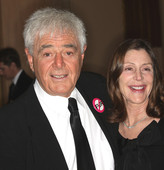
Producer Lauren Shuler Donner
was in a tough spot ... She
had three films in various stages of production in the U.S.
(Universal’s “Cirque du Freak,” DreamWorks/Paramount’s “Hotel for Dogs”
and Fox Searchlight’s “The Secret Life of Bees”) and one shooting in
Australia that desperately needed some personal attention (Fox’s “X-Men
Origins: Wolverine”).
She knew she couldn’t be on opposite sides of the earth at once. So she did what was, for her, unusual: She turned to her husband, Richard Donner, the veteran director-producer, whose credits include such blockbusters as 1978’s “Superman” and the “Lethal Weapon” series. “I said, ‘Could you please help me?’” Shuler Donner says. “And he came down, and he helped produce ‘Wolverine’ for me in Sydney, Australia, while I went to New Orleans on ‘Cirque du Freak.’” As the saying goes, no good deed goes unpunished. Before long, Internet wags were speculating that Donner was waiting in the wings to replace “Wolverine” director Gavin Hood. Click here to read the full article in The Hollywood Reporter. 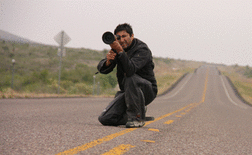
Check out The Hollywood Reporter's Sundance Directors Spotlight 2011, in which I talk to the creative forces behind 10 must-see films at the fest. (I have no idea why there's someone sharing the byline with me. I think he pasted the photos into the web template.)

When the celeb-reality spectacle "The Surreal Life" first premiered on
the former WB Network in 2002, it seemed like a savvy melding of the
Dutch franchise "Big Brother" and the British creation "I'm a Celebrity,
Get Me Out of Here." But the show's co-creator, Cris Abrego, insists its inspiration was as American as -- well, Stove Top Stuffing.
"There was a TV commercial that featured Sally Jessy Raphael making Stove Top while George Hamilton played a video game in the next room," recalls Abrego of the ad that ran in the early 2000s. "We saw it and we were like, 'What if they really did live together?'" Click here to read the entire article in The Hollywood Reporter. 
My recent Q&A with writer-producer/WGA president John
Wells (E.R., The Company Men, etc.) is only available online to Hollywood Reporter subscribers, but you can read the entirety of my more in-depth 2010 feature with Wells exploring the fallout of the contentious 2007-2008 WGA strike here and find out what happened to the guy who dreamed up St. Elmo's Fire while you're at it.

Also check out my 2010 Q&A with director/DGA president Taylor
Hackford from The Hollywood Reporter, in which he discusses the contrasting take-control attitude of his guild, which called a strike only once, in 1987, and it lasted slightly more than three hours
in the east and a mere five minutes in the west.

Some might find it strange to see Jimmy Smits' turn as a Cuban-American district attorney whose skewed vision of justice drives him to murder on Showtime's "Dexter" and Edward James Olmos' performance as the voice of the Doberman El Diablo in Disney's "Beverly Hills Chihuahua" nominated for [Imagen] awards. After all, a cold-blooded killer and an evil dog can hardly be seen as role models ...
Click here to read the entire article about the 2009 Imagen Awards from The Hollywood Reporter. 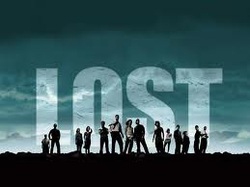
On the eve of the show's 100th episode, "Lost" executive producers Damon Lindelof and Carlton Cuse discuss the genesis of the series, along with their efforts to perpetuate the labyrinthian maze of mysteries surrounding the survivors of Oceanic Flight 815 without alienating casual viewers. Click here to read the story.
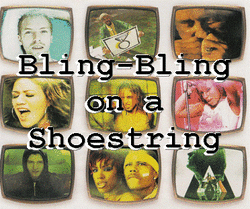
As the bottom falls out of the the recording industry, music video producers learn how to make music videos without the Cristal and the G-5s.
Click here to read the article from The Hollywood Reporter. 
The joys and pitfalls of sharing the screen are examined with actors Jeff Daniels, Rosario Dawson, Ralph
Fiennes, William Hurt, Frank Langella, Emily Mortimer, Tony Shalhoub,
Jimmy Smits and David Strathairn
and writer/directors Paul
Haggis and Stephen Gaghan.
Click here
to read the article from The Hollywood Reporter.
Click image to view article from The Hollywood Reporter.
 Click image to view article from The Hollywood Reporter. 
Click image to view article from The Hollywood Reporter.

When Alpha Repertory Television Services merged with the Entertainment Channel to launch Arts & Entertainment (A&E) in 1984, it was anything but a high- flying corporate juggernaut.
"We were one floor of a building, all within earshot of each other, and we used a small studio on the other side of town," recalls Abbe Raven, who was an assistant to the head of production at the time. "It was very entrepreneurial and it felt very much like we were breaking new ground in the business. On a given day, you could be working on new shows and at the same time doing presentations for affiliates or advertisers." Twenty-five years later, Raven has risen from assistant to CEO, and the company--a joint venture of the Hearst Corp., Disney-ABC Television Group and NBC Universal now known as A&E Television Networks (AETN)--is a global media behemoth with 38 channels in 140 countries around the world, reaching 240 million TV households, and providing a wealth of original programming, from edgy reality shows such as History's "Ice Road Truckers," A&E's "Paranormal State" and "Dog the Bounty Hunter" to the scripted hourlong dramas "The Cleaner" and "The Beast." It also markets a multitude of consumer products, such as books and DVDs. But Raven hasn't allowed that to get between her and the people who watch her shows. Every morning on her train ride to the company's Manhattan offices, she conducts informal market research sessions with her fellow passengers. "I'm not shy," says Raven, who was named CEO in April 2005, after being elevated from executive vp and GM to president the previous year … Click here to read the entire article from The Hollywood Reporter. |
Morgan Freeman’s Biggest Revelation: He Could Shape His Own Destiny
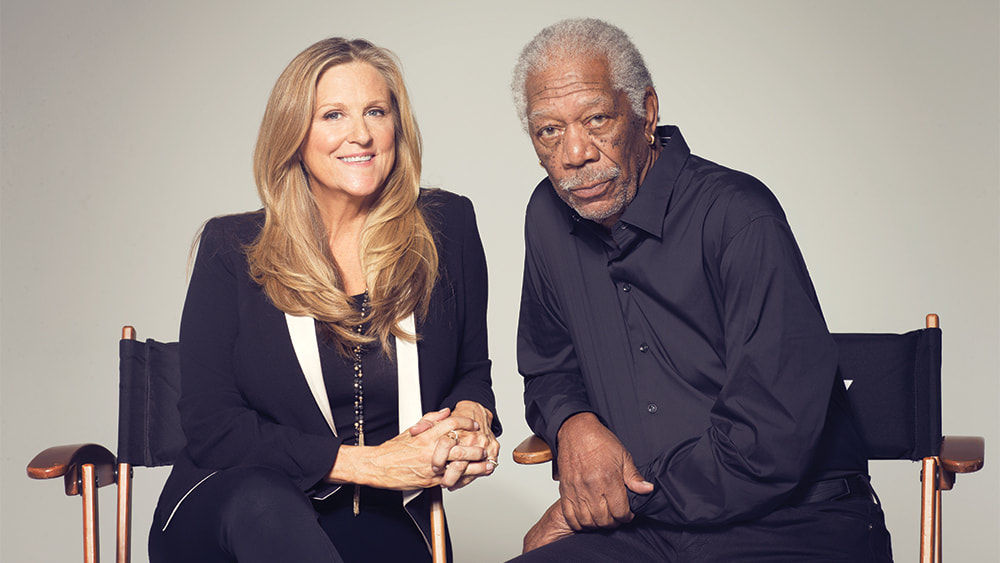
Revelations Entertainment has explored a wide variety of topics since Morgan Freeman and computer-programmer-turned-producer Lori McCreary founded the production company two decades ago: The projects have been both global and universal, tackling South African politics (the 2009 feature “Invictus”) and women in power (CBS’ “Madam Secretary”) in addition to fundamental issues such as love, belief, rebellion and peace (the National Geographic docu-series “The Story of Us”).
But the impetus to form the company came from a deeply personal place in Freeman. Like many men of his generation, Freeman grew up playing cowboy and watching Westerns. But, as an African-American, he didn’t see many people who looked like him riding high in the saddle on the big screen, literally or figuratively. There were a few who were given respectable but not necessarily fully developed roles, including “Spartacus” gladiator Woody Strode and “Adventures of Huckleberry Finn” co-star Rex Ingram, but most high-profile black actors appearing in mainstream films, such as Stepin Fetchit, Mantan Moreland and Willie Best, played subservient, stereotypical characters. “There was no historical evidence that anyone black was doing anything other than nothing,” says Freeman. Also, check out my feature about Freeman's production partner Lori McCreary, and learn about her journey from computer programmer to film producer.
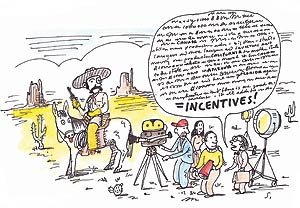
Want a bigger tax credit to keep film & TV production in your state? It might be a case of be careful what you wish for, as I explain in this Variety article.
How Social Media Can Point to Potential Oscar Nominees and Winners
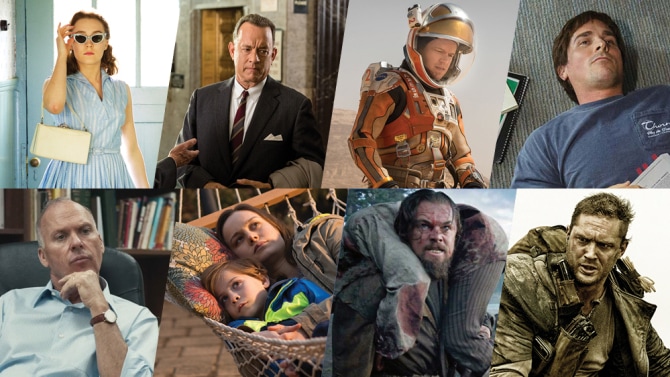
In the old days, Oscar watchers would look to Las Vegas to get a quick breakdown of which nominees were mostly likely to take home a statuette on awards night. Today, they can gauge the potential winners, as well as gain actionable insights on how to better market their films, via a process known as “social listening,” an automated analysis of mentions on platforms such as Twitter, Instagram and YouTube.
Check out the full article in Variety. 
Cast and crew can now take pictures on set and immediately leak the images on social media, spoiling the studios' PR campaigns...
Even on big event films where everyone is required to sign nondisclosure agreements, people often forget that sharing info about the production on social media can get them fired. “They’ll say, ‘Gee, I didn’t realize I couldn’t send out that photo of that endoskeleton,’ ” says [unit publicist Sheryl] Main, who recently worked on “Terminator Genisys.” “Really? You signed something.” Read about what unit publicists to stop social media leaks in my article in the Feb. 17, 2015, issue of Variety. James Bond Leaves Another Global Footprint with 'Spectre'
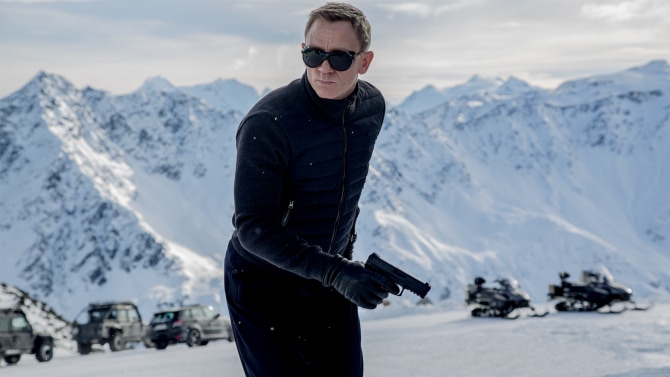
Over the course of 53 years and nearly two dozen films, audiences have come to expect amazing exotic locations from James Bond movies. But the last entry in the series, 2012’s “Skyfall,” while hugely successful, was a little light on the globetrotting. Things are different with 007’s 24th adventure, “Spectre,” once again directed by Sam Mendes, which has the super spy Bond (Daniel Craig) touching down in Mexico, Italy, Morocco and the U.K.
Click here to read the article in Variety. I've also dug some of my other Bond-related articles from the archives. 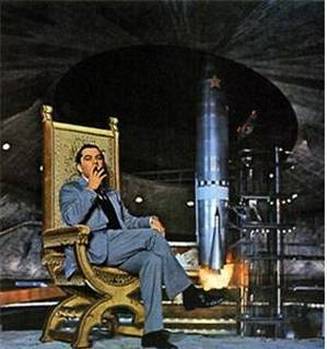 Ken Adam on the volcano set of 1967's "You Only Live Twice." Ken Adam on the volcano set of 1967's "You Only Live Twice."
I've posted the entire transcript of my 2002 Hollywood Reporter interview Ken Adam ("Dr. No," "You Only Live Twice," "Moonraker," etc.), the man who defined the gadget and villain's lair palette for James Bond and all the super spy films that followed,
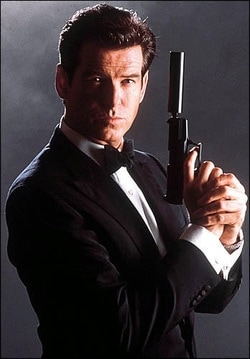
Find out what Pierce Brosnan does when he's asked for autographs while doing his business in a public restroom in this Q&A from the James Bond 40th Anniversary Special Issue of The Hollywood Reporter. Oh, yeah -- and he discusses his philosophy about 007, too.
Click here for the interview. Also check out "Back in Bondage," my in-depth look at Brosnan's fourth and final go-round as 007 in "Die Another Day." 
"Breaking Bad" creator Vince Gilligan put a lot of himself into Walter White. After all, all art is autobiography to a degree, even when the artist works hard to make sure it isn't. In the penultimate episode of the series, Walt seethed in rage as his Gray Matter co-founders referred to him as a “kind, sweet man.” Gilligan, too, has a reputation for being a kind, sweet man.
Gilligan had some success as a TV writer prior to "Breaking Bad" on "The X-Files," but that wasn't his show. He worked in the shadow of its charismatic creator Chris Carter. In an interview I did with Gilligan back in the fall of 2010, he explains how he got the “X-Files” gig (“Hollywood nepotism at its finest,” he said). and reveals his favorite TV moment. 
Did you know that the genesis of "America's Funniest Home Videos" can be traced back to an infestation of Australian frilled lizards in Tokyo? What are the three things host Tom Bergeron wants to see at studio tapings? (Answer: his breath and his nipples.) Learn the stories
behind these and other fun facts in these articles I wrote for Variety marking the 500th episode of the show. 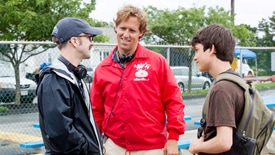 On the set of "The Way Way Back." On the set of "The Way Way Back."
Learn about actors-turned-directors learning from their crews in my lead feature for Variety's Below the Line Impact Report 2013.
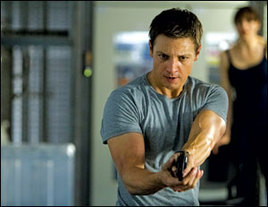
I call on the directors of a gaggle of films (including "The Bourne Legacy," "The Expendables 2," "It's a Disaster" and
"The Apparition") to ask what they learned from their below the line brethren in the lead story for Variety's Below the Line Impact Report. In the same issue, I also profile stunt coordinators and second unit directors from such films as "The Bourne Legacy," "The Avengers" and "Mission Impossible -- Ghost Protocol" and talk to DreamWorks Animation CEO Jeffrey Katzenberg, Weinstein Co. co-chairman Bob Weinstein and others about their adventures working with famed Hollywood attorney Bert Fields. 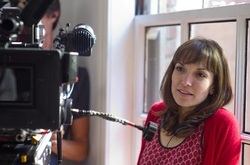
Check out my Variety "Talent Watch" profile of Lorene Scafaria, writer/director of Focus Features' "Seeking a Friend for the End of the World" and, it is rumored, Ashton Kutcher's post-Demi Moore girlfiend.
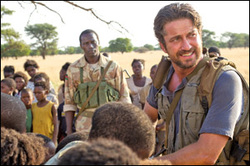 Gerard Butler in "Machine Gun Preacher."
When the studio asked Jason Keller to sign up for kidnapping and dismemberment insurance before traveling to Sudan to research his script for "Machine Gun Preacher," they weren't kidding around.
"You couldn't go anywhere without seeing whole villages that had been razed to the ground and the burned out hulks of tanks and trucks on the side of the road, the remnants of an ambush," says Keller, who went there to get a firsthand look at the Children's Village orphanage run by biker-turned-minister Sam Childers (played by Gerard Butler in the film). Click here to read the entire article in Variety. 
Take a look into the future with my article in Variety's Hollywood's New Leaders Issue, in which I call on a group of industry experts to predict what the world of entertainment might be like in ten years.
If you're unable to view the Variety page, click here. 
Production designer Guy Hendrix Dyas
was atop a snow-covered Fortress Mountain in Alberta, Canada, shooting
the final scenes for "Inception" in late November 2009, when he got the
call on his cell phone: Steven Spielberg wanted to talk to him as soon
as he got back to Los Angeles. Two weeks later, he was sitting in the
director's office at DreamWorks discussing a bigscreen adaptation of
Daniel W. Wilson's sci-fi novel "Robopocalypse."
"The book was still kind of being written," recalls Dyas, who had previously worked with Spielberg on 2008's "Indiana Jones and the Kingdom of the Crystal Skull." "And it was very unclear as to whether Steven was going to be directing this or producing it. [But] he had a twinkle in his eye and a very clear vision of what he wanted to do with the material." Click here to read the entire article in Variety. Also check out my other feature and the artist profiles I wrote for their special issue Below-the-Line Impact Report 2011. 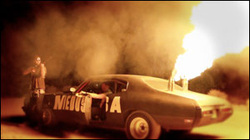 The microbudget film "Bellflower."
I take a look at how four different productions -- ranging from megabudget ("Transformers: Dark of the Moon") to microbudget ("Bellflower") -- dealt with the opportunities and challenges posed with the availability of money or lack thereof in this article in Variety.
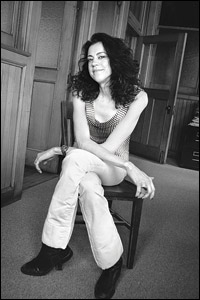
Talk about going for the kill -- Therese DePrez stands six-foot-two in her stocking feet, yet she still wears high heels. Even more impressive is her list of credits, which includes collaborations with high profile maverick filmmakers such as Terry Gilliam, Spike Lee and Stephen Frears and an Art Directors Guild Award for her work on Darren Aronofsky's "Black Swan."
In Variety's "Talent Watch" column, I talk to the New York-based production designer about working on location in Nashville with Korean director Park Chan-wook ("Oldboy") on the gothic thriller "Stoker" (Fox Searchlight), starring Nicole Kidman. 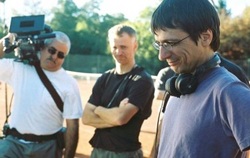
Check out my Filmmaker Magazine Q&A with French Canadian writer/director Philippe Falardeau in which he talks about his Oscar-nominated film "Monsieur Lazhar" and explains how a stint as a contestant on a Canuck reality show turned him into a filmmaker.
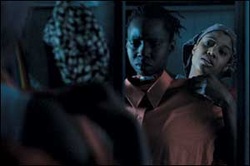
In Variety's "Talent Watch" column, I profile writer/director Dee Rees' struggle to make her highly-personal first feature "Pariah." Click here to read the article.
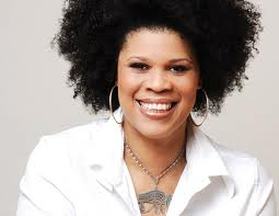
In my Variety profile of casting director Tracy "Twinkie" Byrd, I detail her long journey from baby wrangling to "Sparkle."

Producer Sally Ann Salsano has no illusions about why her reality shows
have become such a big hit with cable programmers.
"I can shoot an entire season for what it costs them to shoot one episode," Salsano says. "You don't pay anyone on reality TV anything. Your talent is free, there are no writers. You just have your producers and that's it." Still, in the wake of the economic downturn and the corresponding drop in ad sales, networks now are demanding that so-called "cheap reality" be made even more cheaply. Click here to read the entire article in The Hollywood Reporter. 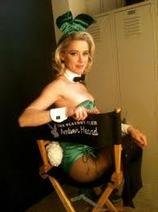
Read my article in Variety about how producers of Fall 2011's crop of TV pilots spent big bucks to recreate the Playboy mansion circa 1960 and stage
zombie rave parties and otherwise bent over backwards to stand out in the pack of potential fall shows, including NBC's "The Playboy Club" (pictured left). 
Like many of today's top casting directors, Victoria Burrows got her
start when personal computers were nonexistent, FedEx was in its
infancy, faxes and videotape machines were rare, and black-and-white
glossies were everywhere.
"It used to be hard-copy pictures, then sit down and meet an actor," Burrows says with little nostalgia. "You would just read them and do call-backs." Now, working on such motion-capture films as Disney's "A Christmas Carol" and "Mars Needs Moms!" she spends her days in casting sessions with partner Scot Boland, calculating how actors' performances will translate in neoprene wet suits covered with white dots and subsequently rendered by 3-D animation software. Click here to read the entire article in The Hollywood Reporter. 
Devin Faraci remembers the bad old days -- way back at the turn of
the millennium -- when studio publicists treated his film Web site CHUD
like a plot-spoiling scourge or, at best, a home for student
journalists.
"Back then, the online guys, no matter what site they were from, were always getting lumped in with the college papers at press events," Faraci says. "There would be a couple of guys who did it full time and then the girls from the Stony Brook Herald or something. Getting one-on-one face time with the talent was the impossible dream." Click here to read the entire article in The Hollywood Reporter. 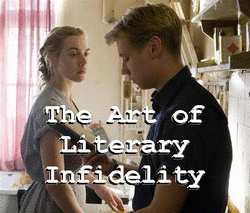
When it comes to
adapting literary works for the big screen, British playwright David
Hare says, one must be promiscuous to be faithful.
"You can't simply step your way through a book with perfect fidelity. If you do, the whole thing is completely dead," Hare argues. John Patrick Shanley (Moonstruck) is more blunt. In transferring his Pulitzer Prize-winning play Doubt to the big screen, "I used every stinking trick I could," he admits. Click here for the full story from The Hollywood Reporter, with Simon Beaufoy (Slumdog Millionaire), Peter Morgan (The Queen, Frost/Nixon) and Eric Roth (Forrest Gump, The Curious Case of Benjamin Button). 
I explore the creative process with Hollywood Film Festival honorees, including actress/director Jodie Foster and screenwriter Robert Towne ("Chinatown," "Shampoo," "The Last Detail") in this article from The Hollywood Reporter.
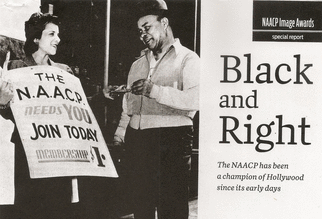 Click image to view article from The Hollywood Reporter. 
I discuss plans for the 2010 edition of the Los Angeles Film Festival with fest director Rebecca Yeldham and Paul Reubens (aka Pee-wee Herman) in this article from The Hollywood Reporter.
Also check out my sidebar on the Argentine director Leopoldo Torre Nilsson (1924-78), a cinematic giant who is a veritable unknown -- even to hardcore cineastes. 
Whether they're racing to do business in China or to find a hot new director from Thailand, Japan or South Korea, it seems everyone in the entertainment industry has their sights set on Asia. But the Far East's cinematic riches are nothing new to the Louis Vuitton International Film Festival...
Click here to read my article about the 25th anniversary of the fest featuring observations from longtime participant Roger Ebert. 
One secret to successfully completing an indie film is to finish it
before you run out of money, use up your favors, alienate your
friends/crew and lose the creative spark that ignited your passion for
the project. Now at events across the country like the 48 Hour Film
Project (www.48hourfilm.com)
and Cinemasports (www.cinemasports.com),
filmmakers are taking that idea to its not-so-logical conclusion and
compressing the entire production process from conception to completion
down to two days or less, starting the weekend with a video camera and
raw stock and going back to work on Monday with a finished short under
their belts.
Click here to read the entire article from Filmmaker Magazine. 
Much is made of
the need
to preserve old films for art's sake. Funds are raised, grants
given out to ensure that even cinematic historical footnotes
like the 1945 Fox melodrama "Leave Her to Heaven" are given as
much care and attention as, say, the Mona Lisa.
But in the end, the real reason more and more movies are being preserved these days is about economics. After decades of letting films decay, the industry has seen the light, which came -- as many Hollywood epiphanies do -- in the form of flashing dollar signs. Click here to read the full article from The Hollywood Reporter. 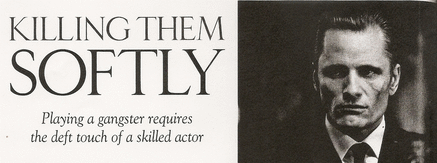 Click image to view article from The Hollywood Reporter. 
Click image to view article from The Hollywood Reporter.
 Click image to view article from The Hollywood Reporter. 
With the profusion of quality shows on the air, it's easy to see why
publications as diverse as Entertainment Weekly, the Washington Times and the
U.K.'s Guardian as well as various bloggers are so eager to declare a new golden
age of television. But out of respect to Milton Berle, Paddy Chayefsky, Rod Serling and all of the other pioneers of the medium, it
seems prudent to weigh all the evidence...
Click here to read the entire article from The Hollywood Reporter. |
